Pulse of the Library 2026: AI and the future of academic, national and public libraries
Coming soon
How are libraries responding to artificial intelligence? What pressures are shaping library strategy? How are attitudes toward open science evolving worldwide?
The Pulse of the Library program, now in its third year, explores these questions through insights from more than 1,800 academic, public and national librarians around the world. The report reveals how the sector is balancing innovation, resource pressures and changing user expectations. It will also show how global library trends have evolved since the 2024 and 2025 surveys.
The Pulse of the Library 2026 edition and an accompanying interactive microsite will launch in September.
Early findings
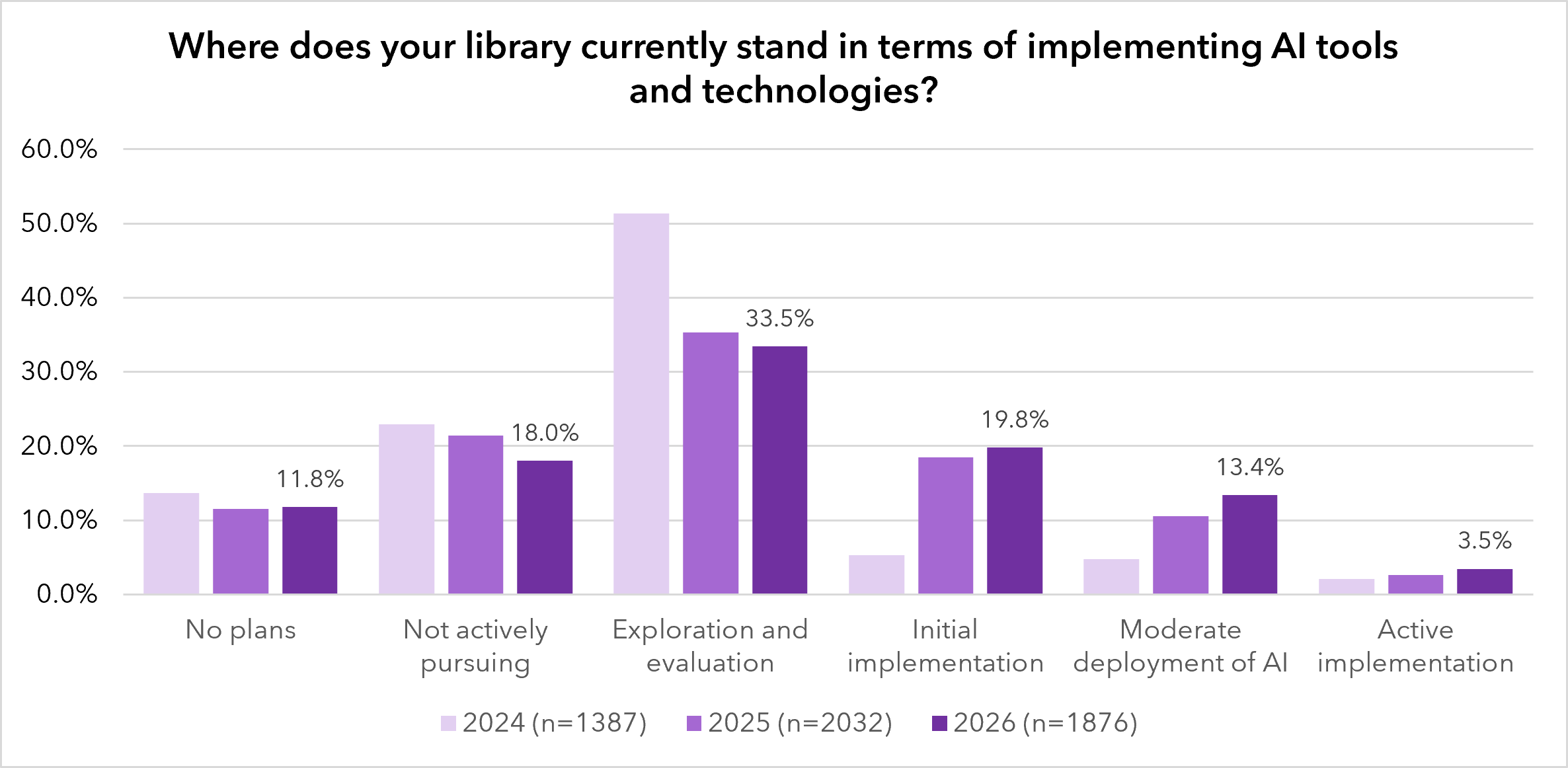
Libraries remain cautious with AI adoption.
Statistically significant relationship between implementation stage and reported impact of AI initiatives.
Students are sprinting ahead with AI.
Be among the first to access the Pulse of the Library 2026 report. Sign up now to receive the library report when it launches.
Read about our Student AI usage paper and Academic AI Impact study.
FAQs
Our Pulse of the Library program explores how academic, national and public libraries worldwide view and use artificial intelligence, their attitudes towards open science, and how these forces and external pressures are reshaping their work, missions and priorities.
Our global library trends report, first launched in 2024, is an annual report based on a global survey of academic, national and public librarians. 2026 will mark the third edition of the Pulse of the Library.
You can find access here the 2024 report and 2025 report.
The Pulse of the Library 2026, now in its third year, explores this question through insights from more than 1,800 academic, public and national librarians around the world. The report reveals how the sector is balancing innovation, resource pressures and changing user expectations. It will also show how library trends have evolved since 2024 and 2025’s surveys.
Yes. Similar to the 2024 and 2025 reports, the 2026 report’s data will be freely available from launch day via a Creative Commons license on our interactive microsite.