Understanding the impact of drug shortages across markets for API manufacturers

Drug shortages are usually discussed from the perspective of patients, hospitals, regulators and finished dose manufacturers. However, every shortage also creates an upstream question: Which active pharmaceutical ingredients (APIs) may become more valuable, more urgently needed or more difficult to source?
For API manufacturers, the challenge is that these signals are often scattered across markets, products, strengths, dosage forms and therapeutic categories. A shortage listing by the FDA or EMA may identify the medicine affected, but its real significance lies further upstream: potential demand pressure on the API, heightened customer requirements and increased competition for manufacturing capacity.
How a shortage in one market signals API demand in another
Drug shortages are rarely isolated to a single company or country. The same API, manufacturing site or distribution network may support products in several markets, meaning that a supply issue in one location can have implications elsewhere.
For global API manufacturers, understanding these connections is essential. A shortage affecting a finished medicine may indicate increased demand for a particular API, pressure on manufacturing capacity or greater competition for a limited number of suppliers. It may also highlight dependencies that are not immediately visible when each market is reviewed separately.
Shortage information is often published through separate national or regional sources. Reviewing these sources individually makes it difficult to identify whether similar products, APIs or therapeutic categories are affected across markets.
A broader view can help manufacturers assess:
- Whether shortages are concentrated in one market or appearing across several
- Whether the same medicine or API is linked to multiple shortage records
- Which strengths or dosage forms are affected
- Whether a shortage is ongoing, worsening or being resolved
- Which customers, suppliers or manufacturing sites may be exposed
This context is particularly important for API manufacturers, whose products may be supplied to multiple finished dose manufacturers across different countries. A shortage reported in one market may therefore be an early indication of wider demand or supply pressure.
What shortage records tell API manufacturers, and what they do not
Shortage data does not provide a complete forecast of future API demand. However, it can help manufacturers identify where further investigation is needed.
For example, an alert about a new shortage could prompt a review of the relevant API, existing customer relationships, available capacity and raw material supply. If similar information appears across the U.S. and E.U., the potential significance may be greater than the original shortage record suggests.
Monitoring how records change over time is also important. New shortages, updates to existing records and the removal of shortages can each provide useful context when assessing whether a supply issue is developing, continuing or improving.
Assessing capacity, alternatives and competition against shortage data
A single, integrated view of shortage information across multiple geographies such as that provided by Cortellis Product Intelligence can help global suppliers connect downstream product availability with upstream manufacturing considerations. It can support customer discussions, capacity planning and the identification of new opportunities.
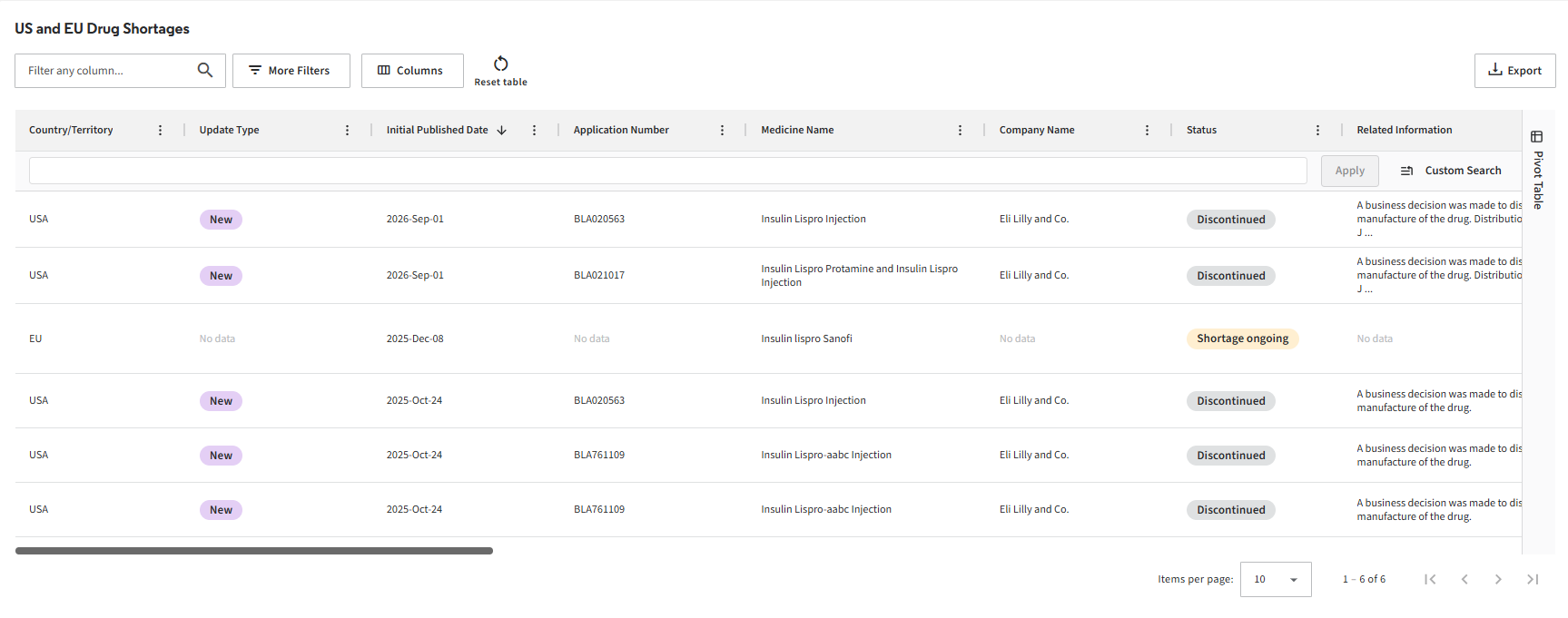
For example, the EMA lists a shortage affecting certain presentations of Insulin lispro Sanofi after an unprecedented increase in demand. The shortage was not related to a quality defect or concerns about safety or efficacy. Instead, Sanofi was unable to increase supply quickly enough, and the duration of the shortage was unknown at the time of reporting.
For another manufacturer already active in diabetes care, insulin products, biosimilars, injectables or related supply chains, an alert signaling this shortage could provide an early opportunity to assess whether it can respond. That assessment would need to consider API or manufacturing capacity, approved alternatives, customer exposure, delivery systems and the affected markets.
This example shows how shortage intelligence can support more than risk monitoring. It can also help manufacturers identify where market demand may be exceeding available supply and where their own capabilities may be relevant, to help address demand pressure.
For example, Cortellis Product Intelligence shows where the shortage is occurring across the U.S. and E.U., recording six entries across the insulin lispro family between October 2025 and September 2026, drawn from both U.S. and E.U. sources. The E.U. shortage has been ongoing since December 2025.
U.S. and E.U. shortage records for the insulin lispro family
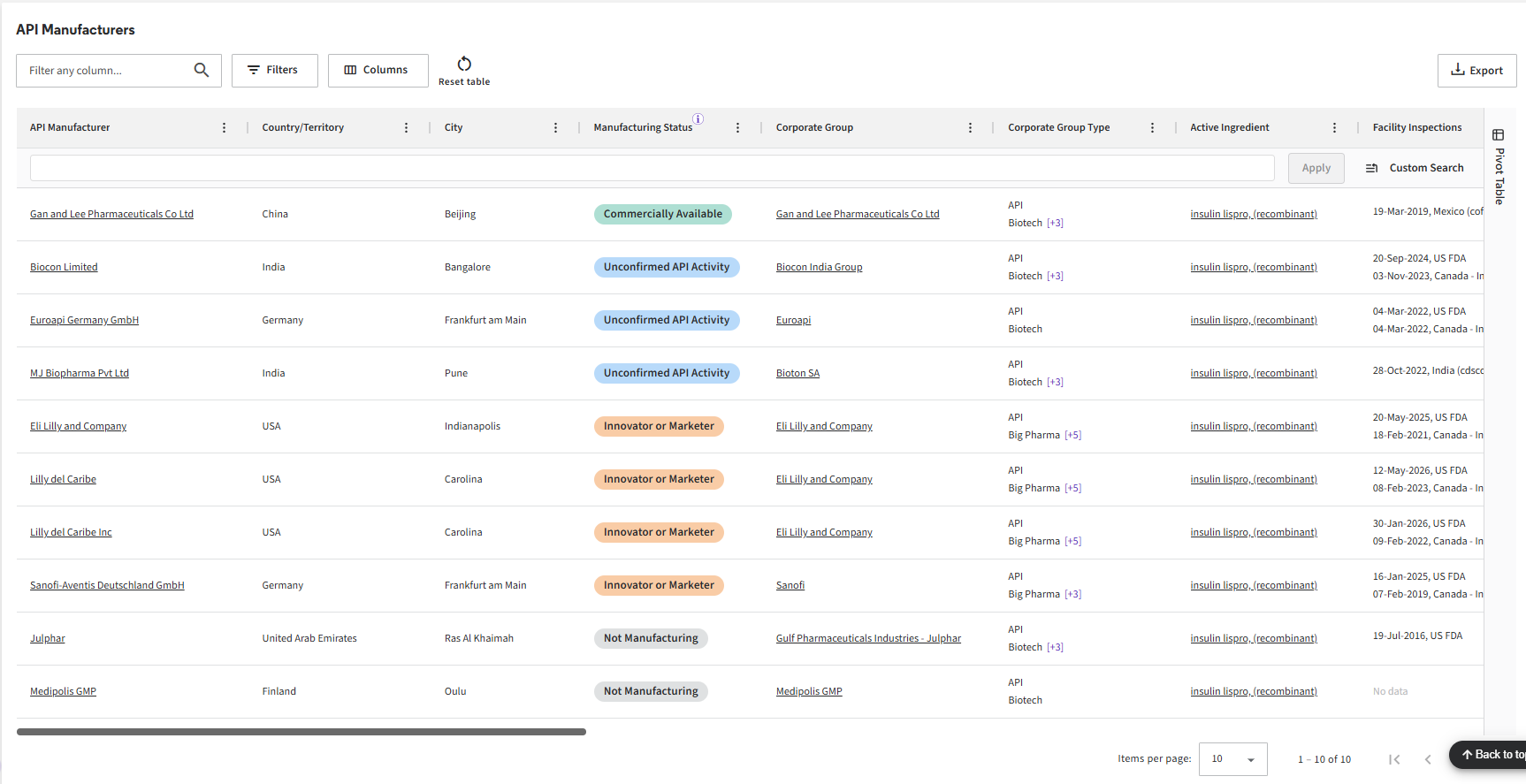
Cortellis Product Intelligence affords a quick view of the competitive viewed to determine how many manufacturers can provide a commercially available product. Of the ten API manufacturers associated with insulin lispro, one is confirmed as commercially available. Three show unconfirmed API activity and two are not currently manufacturing.
API manufacturer status for insulin lispro, showing manufacturing status, corporate group and facility inspection history.
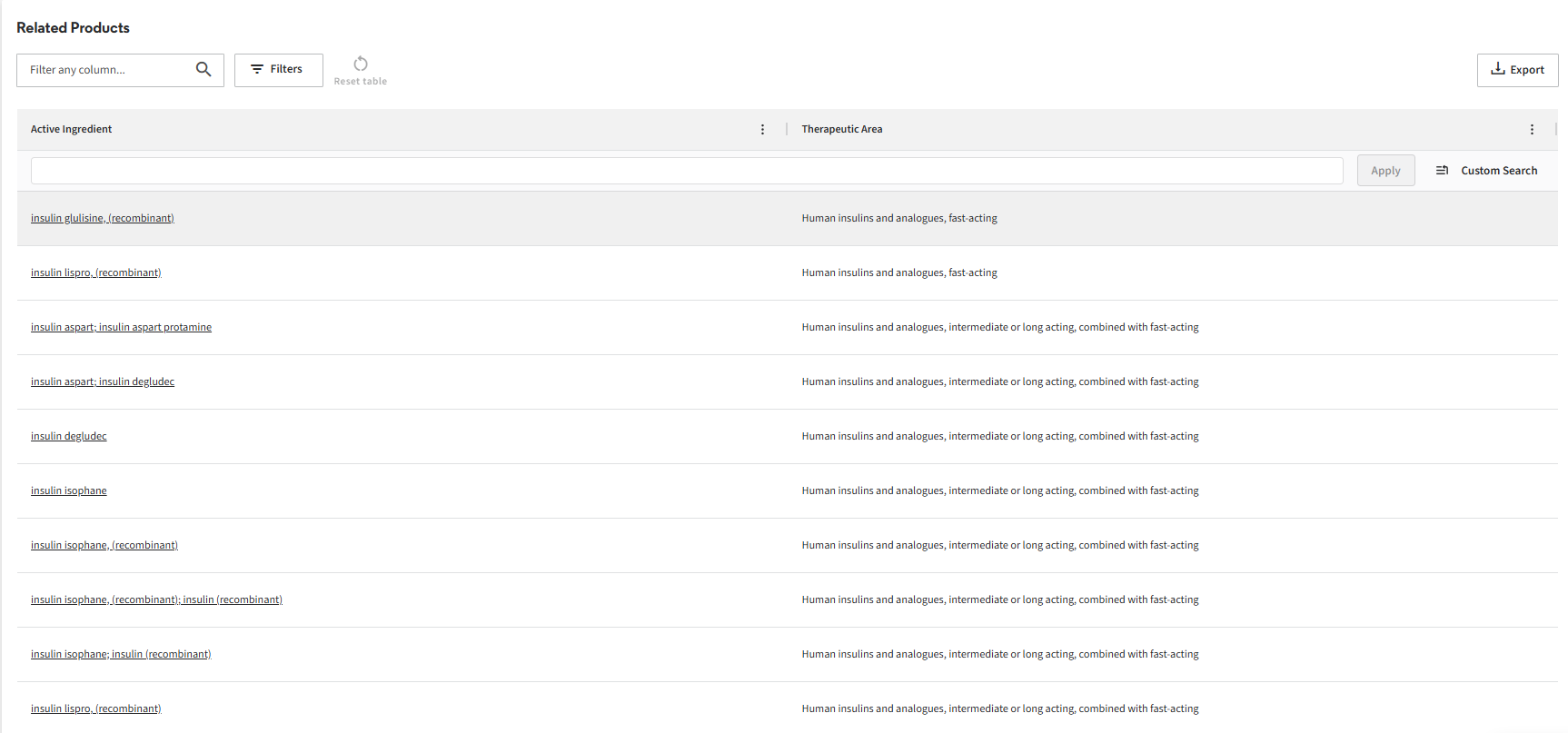
Related product records identify around ten alternative insulin presentations across fast-acting and longer-acting therapeutic categories.
Related insulin products grouped by therapeutic area, used to identify acceptable alternatives
By reviewing shortages across markets and over time, the situation can be more accurately assessed. For example, a shortage affecting specific presentations in several E.U. countries may point to broader demand pressure, while information about unaffected presentations and available alternatives helps clarify the actual scope of the issue.
Contact our team to schedule a demo and learn more about how you can gain a competitive advantage to address drug shortages across markets with Cortellis Product Intelligence.


Related insights
The latest news, technologies, and resources from our team.