Web of Science Research Intelligence
Sharpen your focus. Shape what’s next.
AI-powered research intelligence for funding, strategy, and impact
Developed in partnership with the research community, Web of Science Research Intelligence is an AI-native platform that helps institutions and researchers increase funding, optimize strategy, and demonstrate impact. Built on trusted, unified data, it provides a holistic view of research performance, with responsible AI and a transparent societal impact framework to uncover emerging topics, identify funding and collaborators, and showcase research value.
Unlock value from
unified data
Accelerate decisions with responsible AI
Demonstrate societal
impact
How this research intelligence platform is different

Advanced analytics in a single solution
Analyze linked outputs, including publications, patents, clinical trials, policy, and more in one system

Trusted, publisher-neutral research data
Powered by publisher-neutral data from Web of Science Core Collection, Derwent Patents, and Cortellis clinical trials

Conversational analytics
with AI
Explore data and run complex analyses using natural language
From discovery
to action
Receive proactive, AI-assisted recommendations that link research areas to funding and relevant experts

Transparent societal
impact
Drill down into underlying indicators across multiple output types

Stay ahead with fresh daily analytics
Make decisions with confidence using research data and metrics, helping you track performance, funding activity, and research trends
Power smarter research strategy
Win funding in emerging research areas
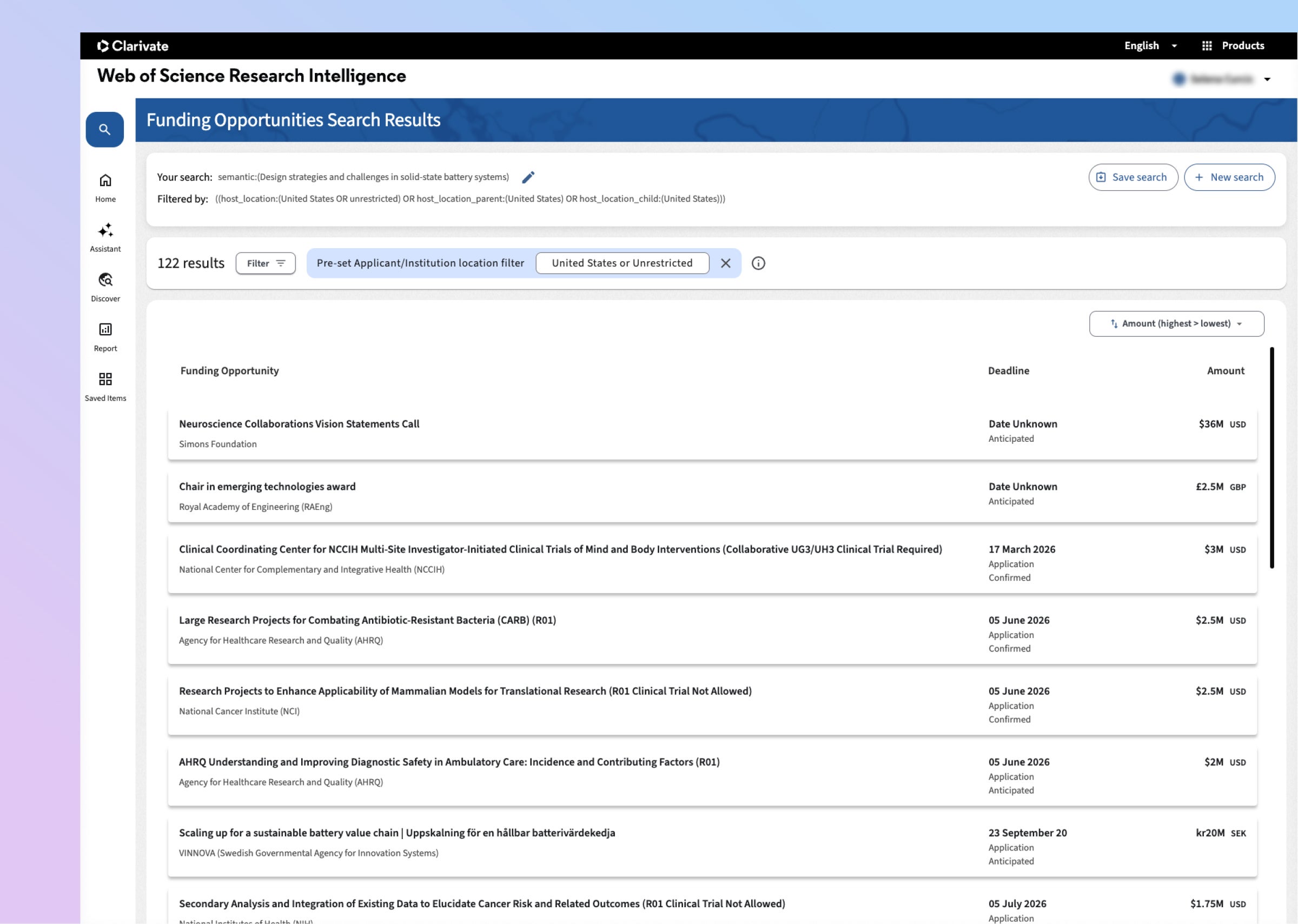
Discover emerging topics aligned to institutional strengths and track funding opportunities that match your research priorities
Discover experts and collaboration opportunities
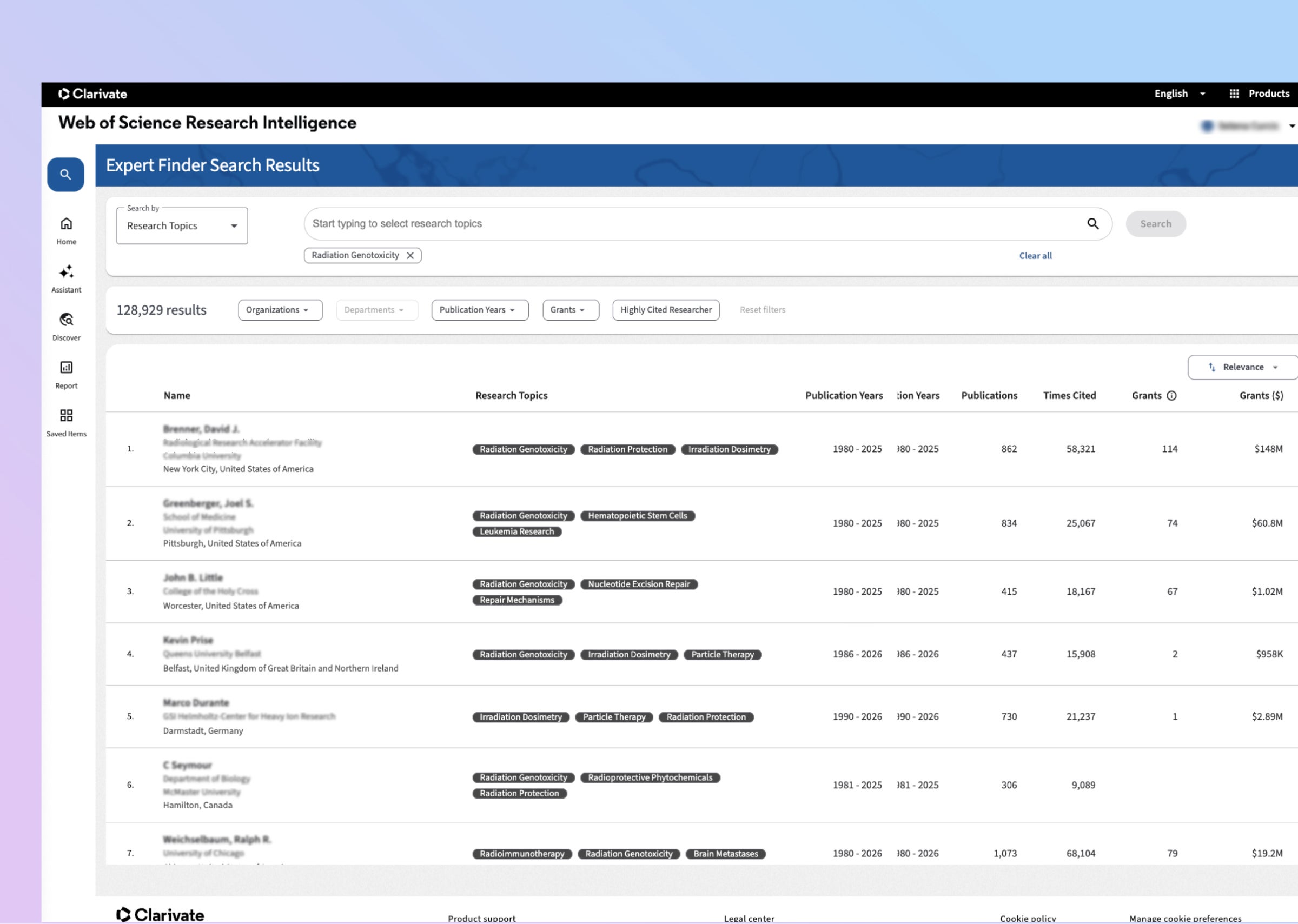
Find experts and uncover collaboration opportunities across disciplines and global initiatives
Ask and answer questions with responsible AI
Gain insights with conversational analytics, whether you’re a data scientist or have limited analysis experience
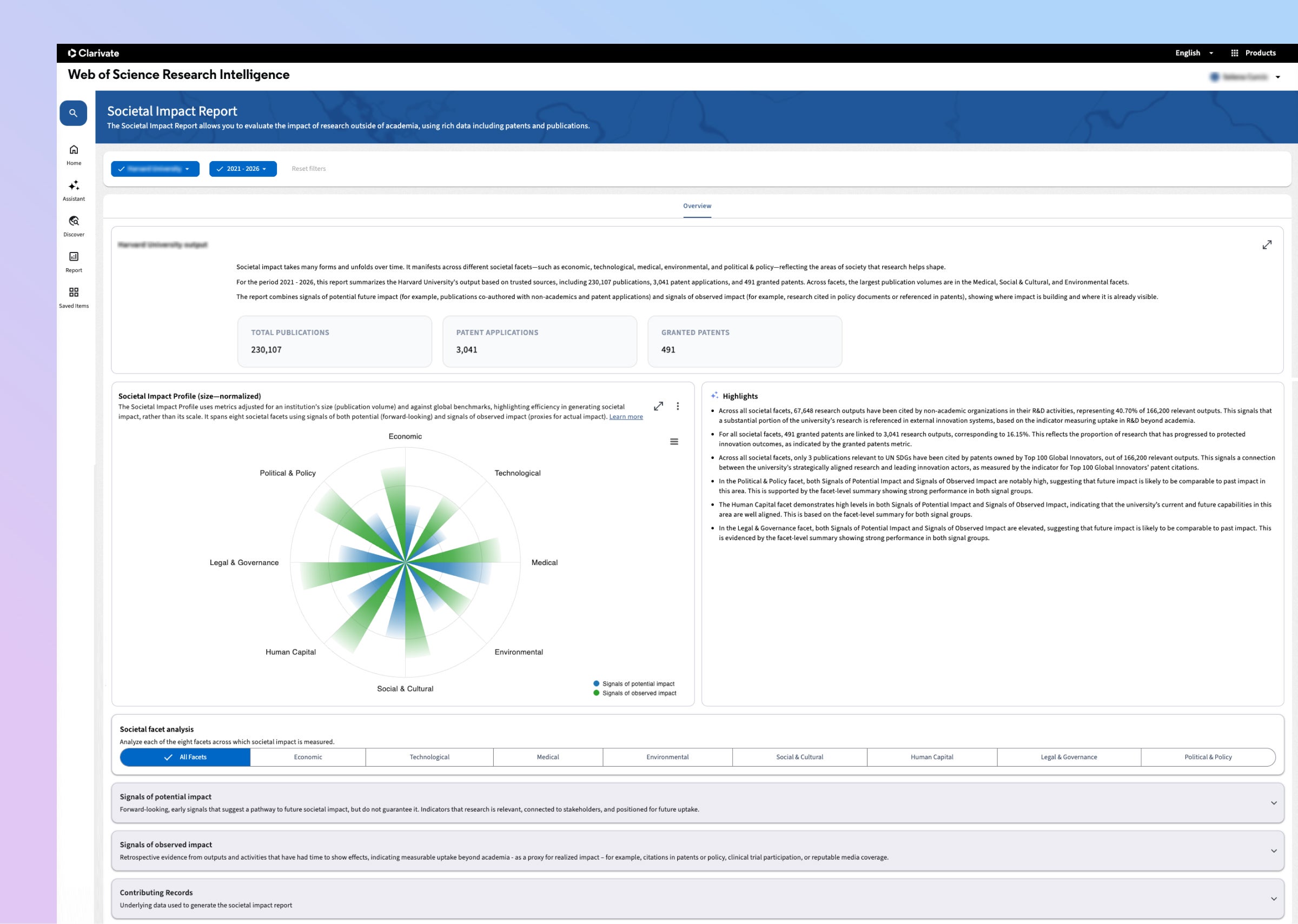
Measure and demonstrate your impact
Evaluate research using a broad range of indicators to demonstrate both societal and citation impact
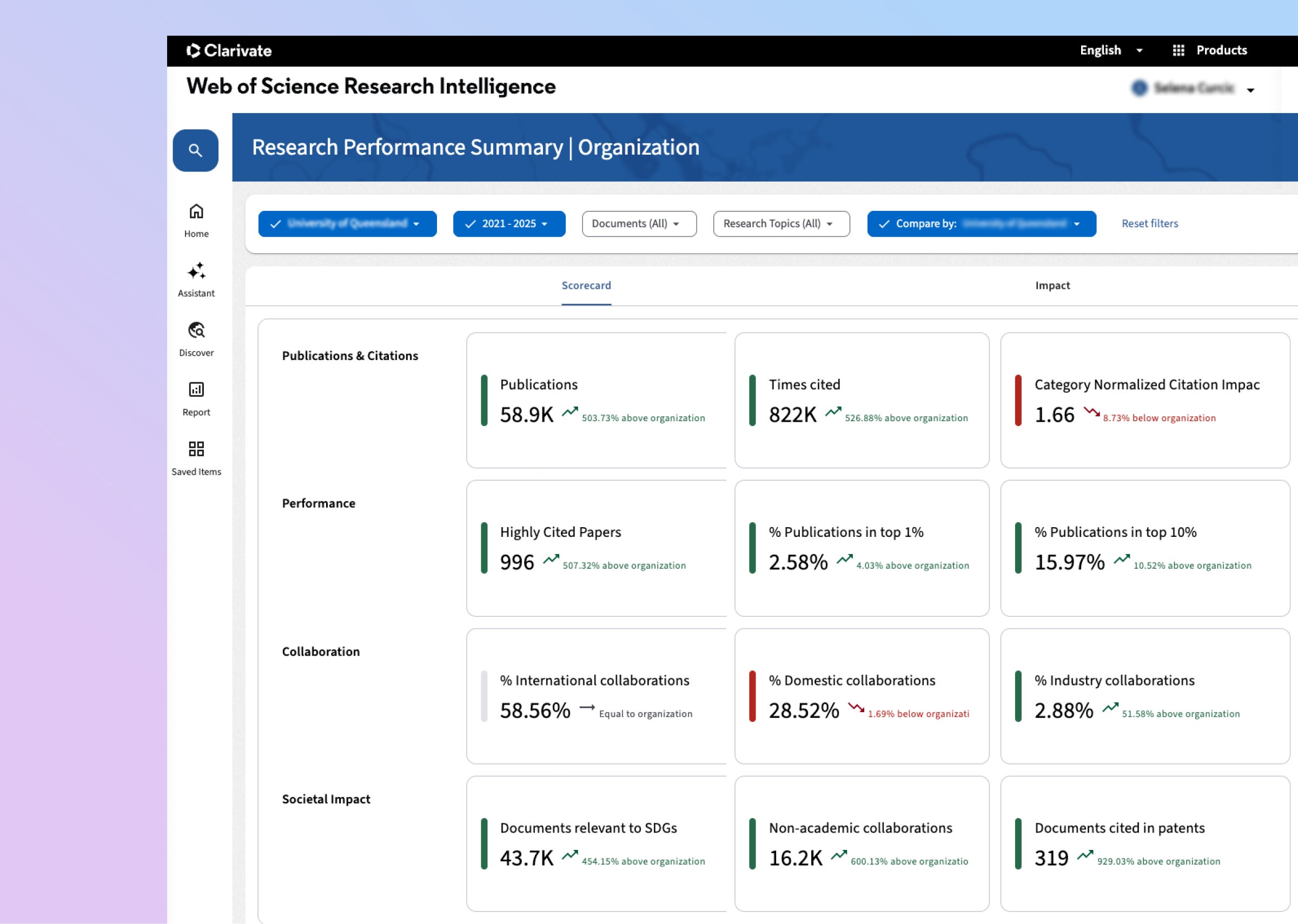
Assess research performance with confidence
Demonstrate strengths, benchmark progress, and inform strategic decisions across key indicators including citation impact, collaboration, funding, and societal impact
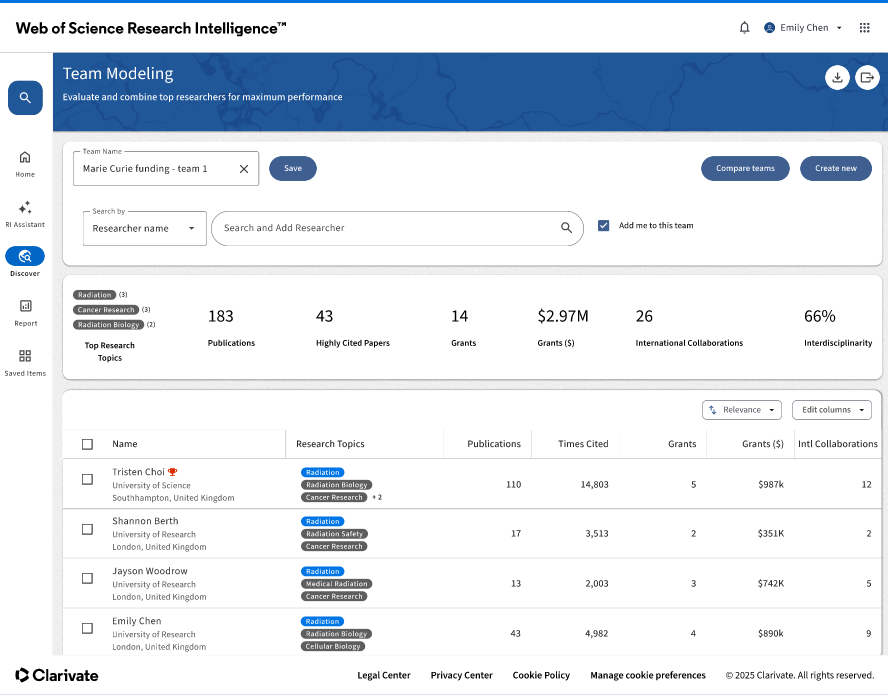
Build high-impact teams for successful grant proposals
Build and compare performance of teams to inform strategic collaboration and strengthen grant proposals
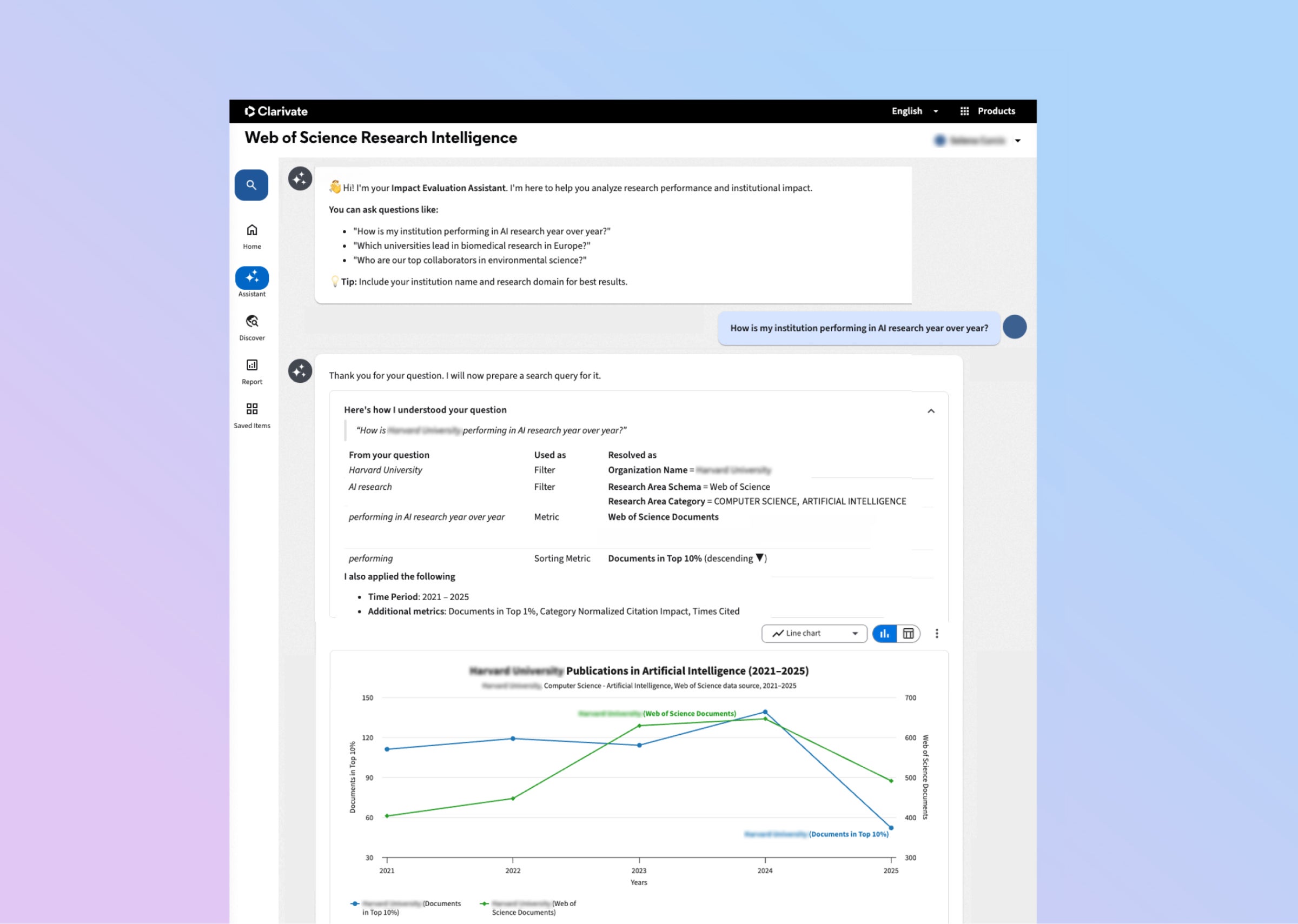
Research Intelligence Assistant
Advance your research strategy with AI guides to uncover impact, strengthen collaborations, and find the right funding
Powered by responsible AI and trusted data, the Research Intelligence Assistant helps institutions navigate complex research intelligence questions with ease. Guided workflows lead users through key analyses — from identifying emerging topics and evaluating impact to surfacing potential collaborations and discovering funding opportunities — turning data into clear, actionable insight.
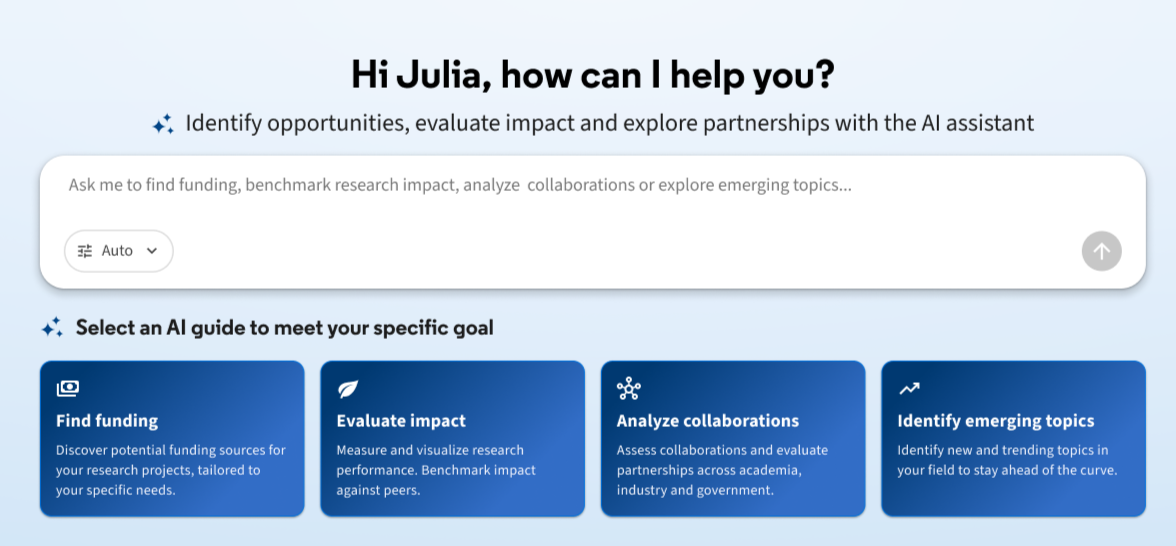
Identify opportunities
Unlock insights
Get recommendations
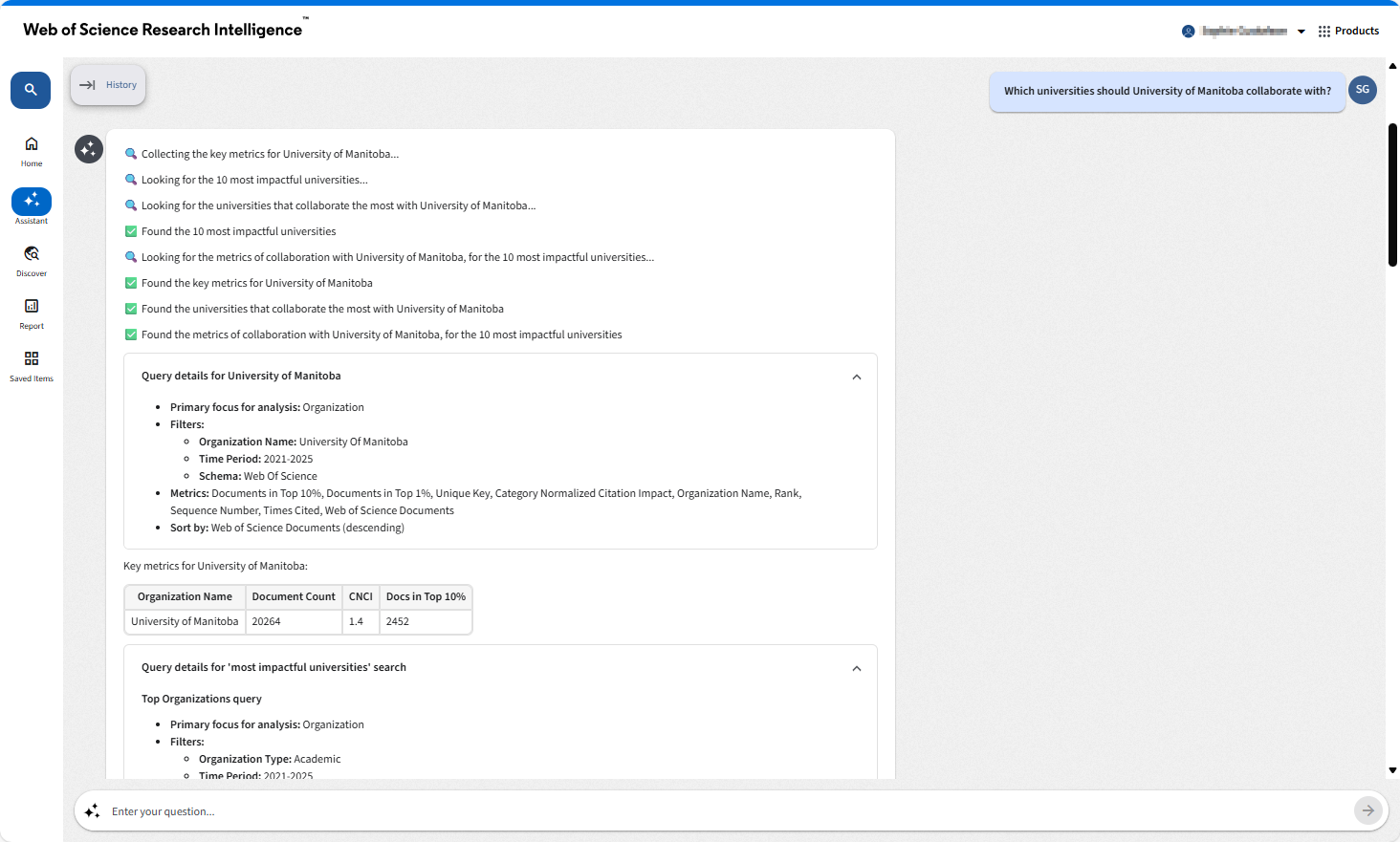
Quickly assess and communicate the influence of your research. The Impact Evaluation guide helps you measure citation performance, track societal impact, and benchmark against peer institutions using trusted, publisher-neutral data. Visualize trends, surface key indicators, and uncover strengths and opportunities to support strategic planning, reporting, and funding applications.
Unlock the full potential of your research network. The Collaboration Analysis guide reveals patterns of collaboration across academia, industry, and government, helping you assess current partnerships and uncover new, high-impact connections. Identify the right collaborators to strengthen proposals, drive innovation, and expand your institution’s influence.
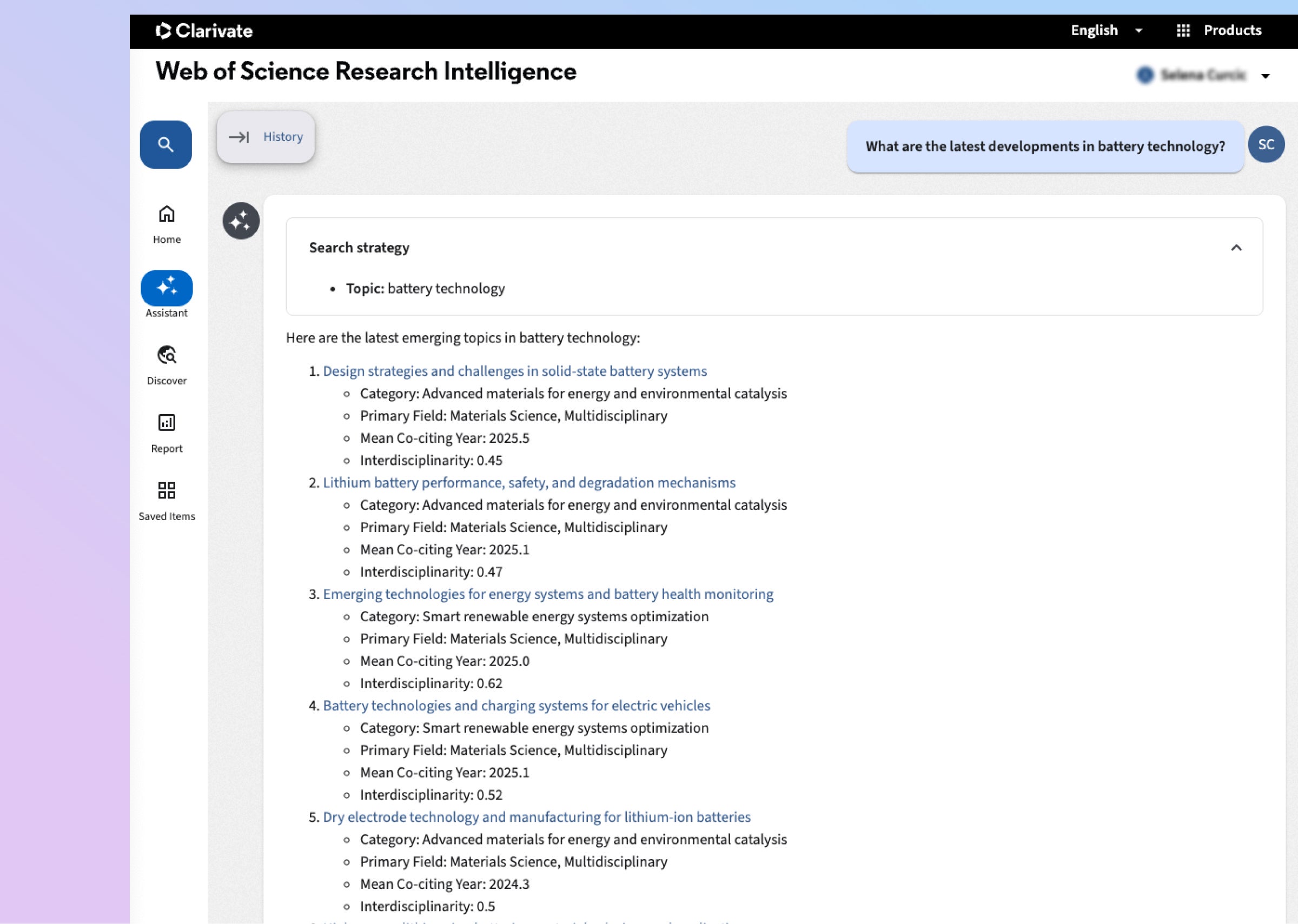
Stay ahead of the curve with early insights into the future of research. The Emerging Topics guide detects new and fast-growing areas of inquiry, helping you spot breakthrough topics, shifting priorities, and underexplored fields.
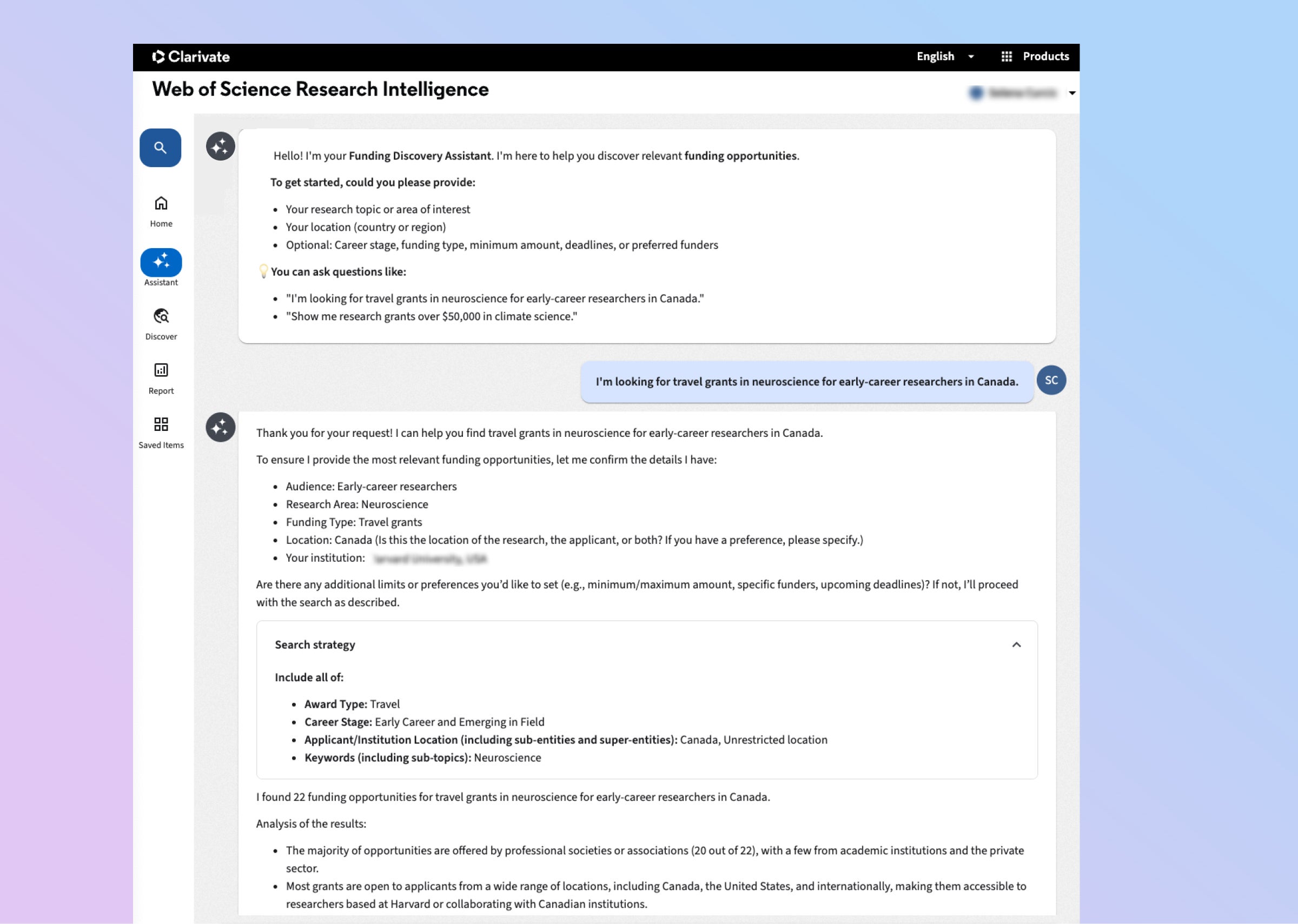
Connect the right researchers with the right funding — fast. The Funding Discovery guide surfaces relevant, timely opportunities from global funders and intelligently matches them to your researchers based on their expertise and track record. Set alerts, save searches, and streamline the path to securing research funding.
Build teams that win grants and drive results. The Team Builder guide identifies leading researchers by expertise, affiliation, and impact, enabling you to model high-performing teams for interdisciplinary projects or institutional planning. Ensure your team has the right mix of skills, experience, and influence to lead.

Resources











FAQs
Web of Science Research Intelligence is designed for the entire research enterprise, including researchers, research administrators, librarians, and institutional leaders. It supports anyone involved in funding discovery, research analysis, collaboration, or impact assessment. By providing a shared foundation of trusted data and insights, the platform helps every role make informed, connected decisions across the research lifecycle.
Research teams face growing pressure to secure funding, strengthen performance, and demonstrate impact—but often rely on fragmented tools and disconnected data. Researchers spend valuable time searching for relevant funding, collaborators, and insights. Research offices need to identify institutional strengths and build competitive teams. Libraries are expected to deliver benchmarking and impact insights quickly, often with limited resources.
Web of Science Research Intelligence brings these workflows together in a single, integrated platform, connecting funding, research activity, performance, and societal impact insights to support faster, more informed decisions across the research community.
Web of Science Research Intelligence provides access to a comprehensive set of research outputs, including publications, patents, grants, policy documents, clinical trials, preprints, and more. Data is drawn from trusted sources such as the Web of Science Core Collection, Derwent, Cortellis, and other Clarivate datasets to deliver a connected view of research activity and impact.
AI is integrated across every layer of the solution, from metadata enhancements to intuitive analytics and conversational discovery. AI guides powered by agentic AI proactively communicate insights, produce summaries and narratives, and recommend next steps. This minimizes administrative burden so that users can concentrate on strategic decision-making rather than on manual data gathering and analysis. Example use cases include:
- A conversational AI assistant with an intuitive user experience powered by agentic AI: The solution has an intelligent interface for analytical queries designed to make research analytics and insights accessible to all users, regardless of their expertise in data analysis or research evaluation.
- Impact narratives: Demonstrating impact is about telling your story, as opposed to simply showing numbers. The AI assistant will do this for users by writing impact narratives that draw from both a societal impact framework as well as traditional publication and citation indicators.
- Chart summaries: Built-in, automated tools provide quick, easy-to-understand summaries of charts that help users quickly grasp key insights.
- Author matching: AI helps connect authors to their works and organizational units.
- Funding opportunities discovery: The platform will link emerging research topics, researcher profiles and department profiles to relevant funding opportunities
We are deeply committed to ensuring that our AI-driven features remain transparent and responsible. All narratives and results generated by our assistant are grounded in factual data retrieved from classic databases. Where possible, we provide users with the reasoning behind AI-driven insights and recommendations, allowing users to verify and understand each conclusion.
Web of Science Research Intelligence and Web of Science have the same profiles. In the future, institutions will be able to create Web of Science profiles via Web of Science Research Intelligence.
Web of Science Research Intelligence is a transformational, next-generation solution. It differs from our current funding & analytics products by offering:
- A proactive system that delivers personalized recommendations directly to users through notifications, email alerts or personalized dashboards, enabling users to stay informed about relevant opportunities within their field.
- A framework to measure societal impact alongside traditional publication and citation-based metrics, offering a holistic view of research performance.
- Conversational guides powered by generative AI enable users to gain insights and create qualitative narratives of research impact.
- A pre-populated system with comprehensive coverage of researchers across disciplines
- Team modeling capabilities that will help users find the best team to make research proposals more attractive to funding agencies, to optimize team performance and drive higher-quality research outcomes, and more.


