A more transparent, connected experience in Web of Science Research Assistant


The latest Web of Science Research Assistant update introduces a unified entry point, greater AI transparency, and new author and visualization tools that enhance the user experience.
AI features are now widely embedded across academic research tools, promising efficiency and speed. As AI adoption grows, librarians are focused on ensuring that transparency and agency aren’t lost in the process. The 2025 Pulse of the Library report found that 67% of libraries are moving toward AI. At the same time, librarians identified evaluating AI-generated content as their top literacy need. A clear expectation has developed: AI tools must show how they arrive at their answers to earn trust.
In parallel, researchers are working in an environment that grows more complex by the day, and navigating information is more demanding. Researchers need more than a list of articles — they need help understanding the broader landscape: recognizing patterns, identifying key contributors, and spotting emerging themes. They must achieve this while administrative responsibilities steadily consume more of their time.
We are pleased to introduce a set of enhancements to the AI-powered Web of Science Research Assistant that address these challenges for both researchers and librarians. Our latest improvements strengthen the user experience by deepening transparency, easing interpretation of results, and reducing friction across key research tasks.
A unified entry point for the entire research journey
Prior to this release, Web of Science Research Assistant organized its agentic AI capabilities into distinct guides: one for literature reviews, another for topic exploration, and another to find a journal during publication planning. While offering useful structure, this approach asked users to choose a starting point, even though research doesn’t always work that way. Questions and ideas evolve, and what began as a topic exploration can quickly become a literature review or an author investigation.
With this release, we are creating a unified experience. The research assistant now offers a single conversational entry point where any question, whether related to a concept, field, author, or potential journal, sets an integrated workflow into motion. Behind the scenes, the system is now fully agentic. It automatically determines whether the user needs a topic map, structured review, journal recommendation, or something else entirely.
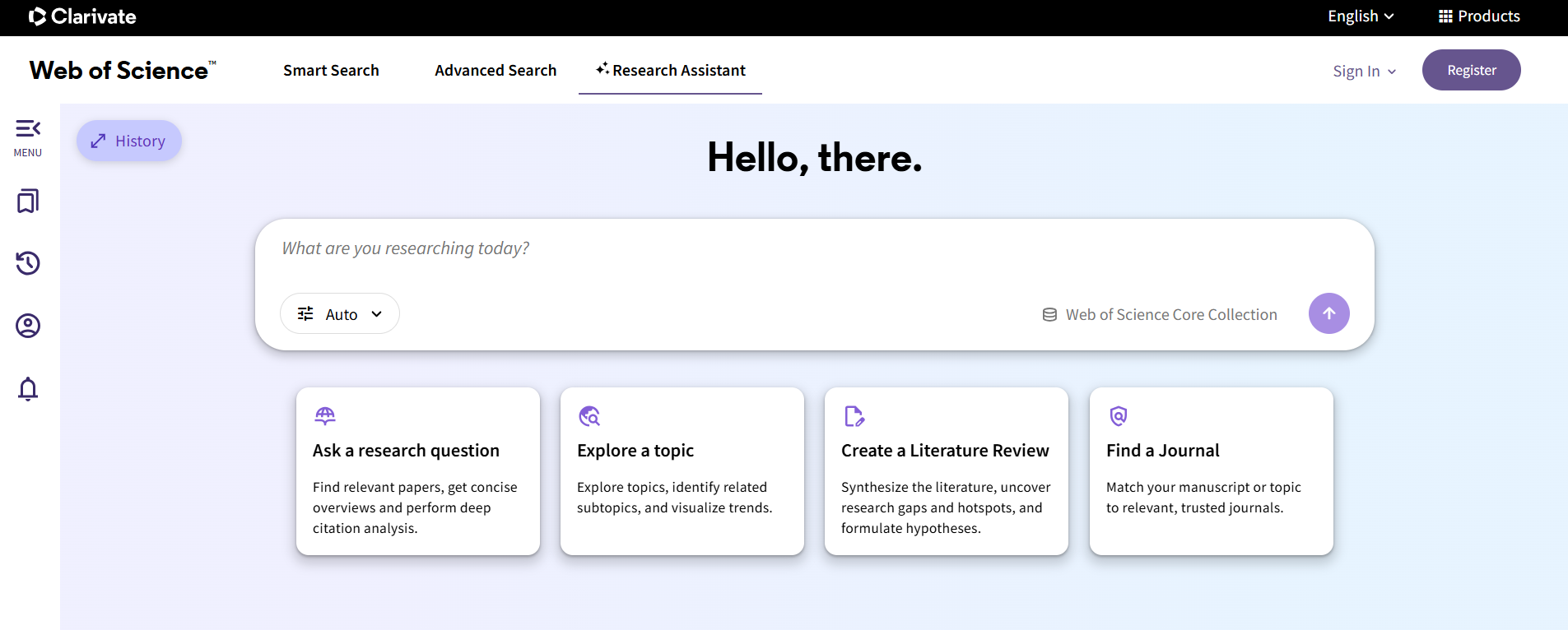
Figure 1: A unified entry point for Web of Science Research Assistant
The unified entry point makes it easier for researchers to dive straight into their work, while existing guides remain visible to provide alternative starting points and prompts. The new unified experience offers a more intuitive model that meets users where they are and guides them forward.
Greater transparency and trust through pre‑search query visibility
In the 2025 Pulse of the Library findings, librarians identified trust, ethical use, and academic integrity as top priorities for AI adoption. The most critical AI literacy skill for library staff was the ability to assess AI-generated content for accuracy and quality.
This emphasis on trust and the ability to verify AI outputs underscores the need for greater clarity in how AI systems interpret user intent. In response to this valuable customer feedback, the Web of Science Research Assistant now provides search transparency before a search is run. When a user enters a question, the system:
- clarifies user intent
- presents a proposed search strategy
- shows how the question was interpreted
- reveals synonyms, related concepts, and expanded terms
- displays the structured logic the agent intends to use
The search runs only after the user reviews and approves the strategy. This gives both librarians and researchers control over the process and confidence in how the question was interpreted.
After the search, the research assistant provides the fully structured query exactly as it would appear in the Advanced Search experience, making it easy for users to understand, document, and share the AI-generated query with others.
New agentic AI-powered author and visualization tools for richer context
Search transparency is only part of the picture — researchers also need clarity about the experts influencing a topic. The new author tool builds on Web of Science Researcher Profiles to offer a clearer, more contextual view of an author’s work. Rather than simply listing publications and affiliations, it interprets profile data to highlight an author’s areas of expertise, how their focus has evolved, their collaboration networks, and their influence within a field. When users ask questions about a researcher, Web of Science Research Assistant delivers a helpful overview that supports everything from collaborator discovery to reviewer selection.
Just as the author tool clarifies how an author has shaped a field, the visualization tool helps users interpret the patterns and trends within a research area. All visualizations, including topic maps, word clouds, co‑citation networks, and trend graphs, can now be generated from any point in the workflow. Moreover, the tool can explain what a visualization shows and answer follow‑up questions, shortening the process of extracting key takeaways. As librarians guide users through more complex analytical tasks, interpretive capabilities like these are increasingly essential.
A more connected experience for the Web of Science community
These enhancements create a more cohesive workflow across Web of Science Research Assistant. Researchers can explore topics, interpret results, evaluate authors, and navigate visualizations in one continuous flow. Librarians can guide their communities through research with tools that are more transparent and aligned with responsible AI use.
At a time when libraries are steadily increasing AI adoption, yet still face confidence gaps and questions of trust, tools that make AI clear, explainable, and aligned with human judgment are critical. As Web of Science Research Assistant evolves to make discovery and exploration more effortless, it also eases the cognitive load of navigating complex processes, giving researchers space to focus on the thinking that truly moves their work forward.
Learn more about Web of Science Research Assistant.


Related insights
The latest news, technologies, and resources from our team.