
Web of Science DeepR brings together Web of Science discovery and full text from ProQuest and other sources to create a more connected experience and unlock new possibilities for AI-assisted research.
We’re excited to announce Web of Science DeepR, a new set of capabilities that brings AI-assisted document exploration and full-text content from ProQuest and other sources directly into the Web of Science experience.
Researchers often move between multiple systems as they assess the relevance of an article, review its findings, and determine how it contributes to their work. While Web of Science has long connected researchers to full text through publisher and library links, moving between discovery records and external content can create friction and interrupt the research process.
DeepR addresses this by extending the Web of Science Core Collection experience beyond discovery and linking. It introduces ways to access, read, and learn more about an article within the Web of Science environment. The first release later this year includes capabilities that enable researchers to:
- Open eligible full-text articles in an integrated PDF and HTML reader
- Explore article content with an AI-powered Document Assistant
- Quickly determine which articles warrant deeper review through relevance summaries
Building new researcher experiences on a trusted foundation
For many researchers, evaluating a paper means moving between database records, publisher sites, PDFs, and multiple browser tabs. DeepR brings full-text reading and article-level AI capabilities into the Web of Science experience, allowing researchers to find and read articles, assess relevance, and explore content in one place without breaking their flow.
By reducing the time spent navigating across links, systems, and formats, DeepR helps researchers focus their attention on the papers most likely to advance their work. AI-generated overviews and document exploration tools are designed to support faster relevance assessment, helping researchers decide where to invest their limited reading time.
We believe AI-enabled research tools should help researchers engage more deeply with scholarly content, not distance them from it. By keeping the full text in view and grounding AI-generated outputs in the article under review, DeepR helps researchers assess the literature more efficiently while maintaining transparency into the underlying research.
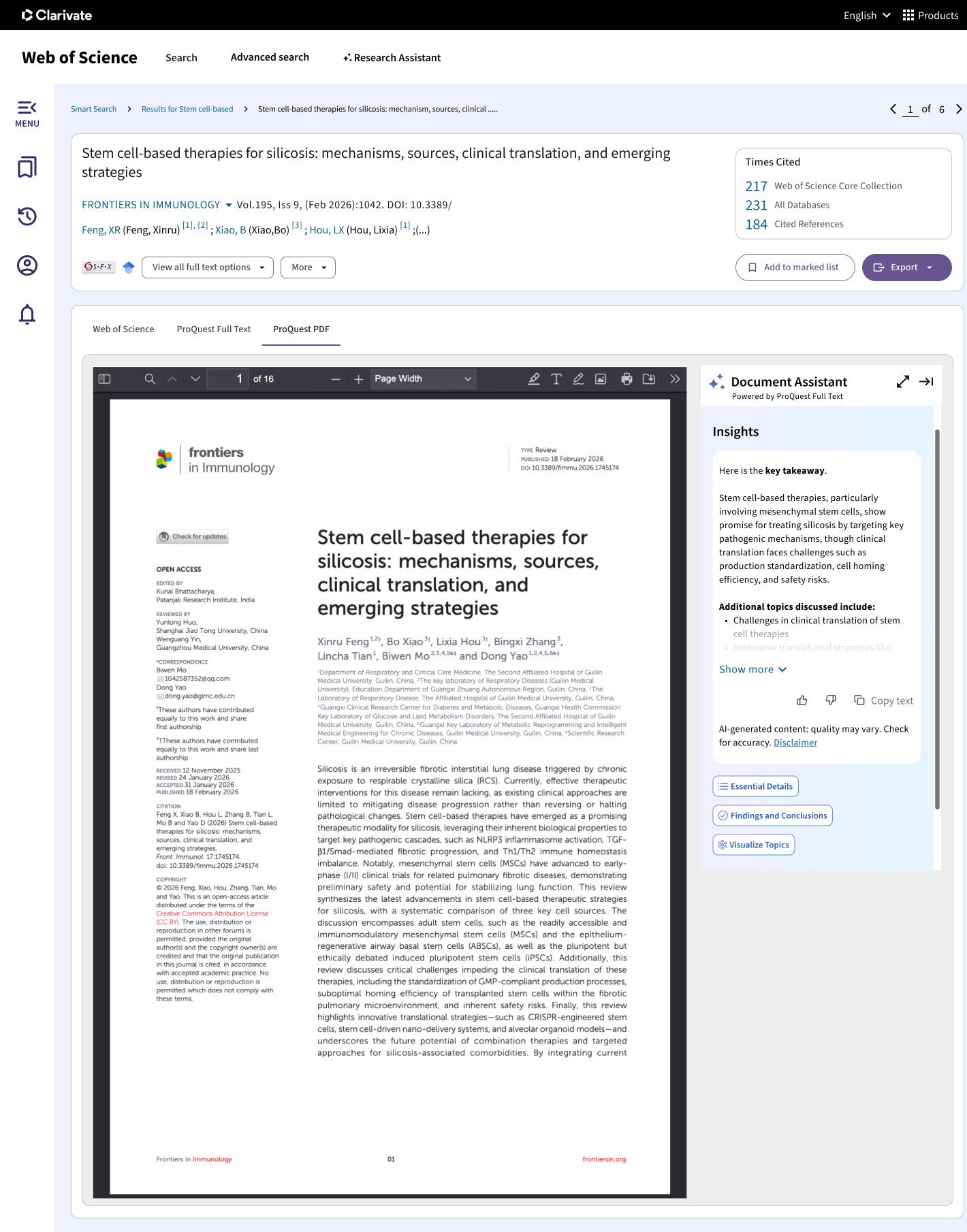
Figure 1: Built-in document reader displays licensed full-text articles directly within Web of Science
Supporting library investments in research workflows
DeepR extends the Web of Science experience without requiring libraries to introduce a separate platform, manage a new implementation, or drive adoption of another research tool. Researchers access DeepR capabilities within the Web of Science environment they already use, allowing institutions to deliver new functionality through an established workflow.
At launch, DeepR provides access to eligible full-text available through an institution’s ProQuest subscriptions as well as open access content. While the initial release focuses on supported ProQuest and open access content, DeepR is designed as a foundation for a broader full-text experience over time. We plan to incorporate additional content sources in future, as the experience evolves.
For libraries, DeepR offers a new way to surface content that is already available to their communities. By bringing subscribed and open access content closer to the point of discovery, DeepR can help increase usage of library-funded resources and strengthen libraries’ ability to demonstrate the value of those investments.
Creating new possibilities for scholarly discovery
For many research questions, the most useful information is not always found in the metadata associated with an article. It may be in the study design or methodology, the materials used or the future work proposed by the authors. These details help researchers judge relevance, compare evidence and understand where knowledge is still developing. As full text becomes more integrated, Web of Science plans to support richer forms of exploration grounded in the substance of the research itself.
Web of Science Research Assistant, an agentic AI research assistant that helps researchers navigate complex research tasks using Web of Science Core Collection data, will also draw on deeper full-text signals. This supports more contextual answers, enhanced literature review experiences and new ways of exploring how evidence, ideas and research questions develop across the scholarly record.
The first DeepR release later this year marks the beginning of a broader effort to create a more connected research experience – one that helps researchers move more efficiently from finding information to understanding and applying it, while ensuring that the evidence behind every insight remains clear and accessible.
Looking ahead
We believe the next generation of research discovery should build on trusted foundations while embracing new possibilities for how scholars interact with the scholarly record.
DeepR helps establish a foundation for more connected workflow support spanning the entire research lifecycle. Over time, researchers will be able to move more naturally between finding funding, reviewing literature, exploring evidence, developing ideas and communicating results within a unified, publisher-neutral research environment grounded in high-quality content, trusted workflows, and reliable analytics.
This is the future DeepR is helping to shape: one where scholars can engage more deeply with evidence, navigate complexity with confidence and advance knowledge with clearer purpose.
Want to help shape the future of Web of Science? Contact us to become a Product Working Group development partner: wospwg@clarivate.com.


Related insights
The latest news, technologies, and resources from our team.