The long road from insight to impact: How today’s breakthroughs were decades in the making

Many of today’s most important scientific breakthroughs — from GLP-1 weight-loss drugs to advanced medical imaging — trace their origins to research conducted decades ago. Citation Laureates 2026, Clarivate’s annual recognition of researchers whose work is of Nobel class, highlights how sustained scientific influence can reveal discoveries that continue to shape research, innovation and society long after their first publication.
The scientific breakthroughs dominating headlines today often began long before smartphones, social media, or even the World Wide Web. Citation Laureates 2026 — Clarivate’s annual recognition of researchers whose work is of Nobel class — highlights how discoveries made many years ago continue to shape medicine, technology, and daily life.
Each year, the Institute for Scientific Information (ISI) at Clarivate identifies, through citation analysis and expert assessment, a select group of researchers whose work demonstrates exceptional and sustained influence on their fields. Citation Laureates are not predictions for a specific Nobel Prize year; rather, they identify researchers whose work is of Nobel class and worthy of recognition.
This year’s Citation Laureates list recognizes 22 researchers across Physiology or Medicine, Physics, Chemistry, and Economics whose work has shaped entire fields and, in many cases, changed millions of lives. Many of the discoveries being honored this year were made decades ago, such as the molecular biology of weight-loss drugs and the optical imaging techniques now routine in hospitals worldwide. Their societal impact — now plain for all to see — was anything but obvious at the time.
From a 1980s lab bench to a global health revolution


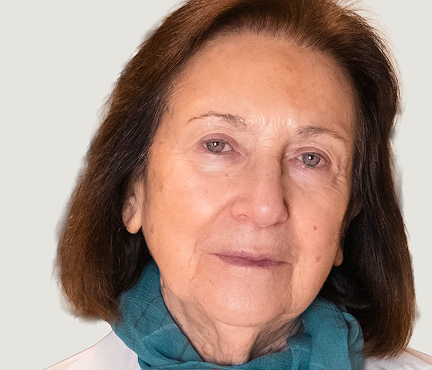
Perhaps no example illustrates the long road from discovery to societal impact better than the story of GLP-1 receptor agonists — the class of drugs that has revolutionized the treatment of diabetes and obesity. But the foundational science dates back to the 1980s, when researchers began uncovering the biology of the glucagon-like peptide-1 receptor.
The Citation Laureates 2026 recognized for this revolutionary work in Physiology or Medicine are Daniel J. Drucker (Sinai Health’s Lunenfeld-Tanenbaum Research Institute, Canada), Jens Juul Holst (University of Copenhagen, Denmark), and Svetlana Mojsov (Rockefeller University, United States), whose contributions at different times and in different ways were pivotal to the discovery and development of GLP-1-based therapies.
The path from discovery to a transformative drug was neither quick nor straightforward. It required decades of development, clinical testing, and regulatory approval. And this example illustrates the complexity of assigning recognition in fields shaped by many contributors over many years. Joel Habener, one of the prime discoverers of GLP-1, passed away at age 88 in December 2025, underscoring just how long this journey has been.
The GLP-1 story is a powerful reminder that today’s most talked-about medical advance had its origins more than 40 years ago, in work that attracted relatively little public attention at the time.
Seeing the invisible



In 1990-91, James G. Fujimoto (MIT, U.S.), David Huang (Oregon Health & Science University, U.S.), and Eric A. Swanson (MIT, U.S.) developed optical coherence tomography (OCT) — a technique for non-invasive imaging of soft tissue structures, including the retina and coronary arteries. It enabled clinicians to examine living tissue without surgery, transforming diagnostic practice in ophthalmology and cardiology. Today, millions of eye patients receive OCT scans as part of routine care, yet the technology began as a physics experiment.
The key paper describing this work has been cited more than 12,000 times — an extraordinarily rare distinction in any field. Its authors were recognized with both the Lasker DeBakey Clinical Medical Research Award and the National Medal of Technology and Innovation in 2023. Yet for years after its publication, OCT was simply a promising technique.
The technology that is now a standard clinical tool took decades to move from proof of concept to widespread adoption. Its exceptional citation record showed the depth and persistence of its research influence well before OCT became widely recognized outside specialist communities.
Engineering at the atomic level


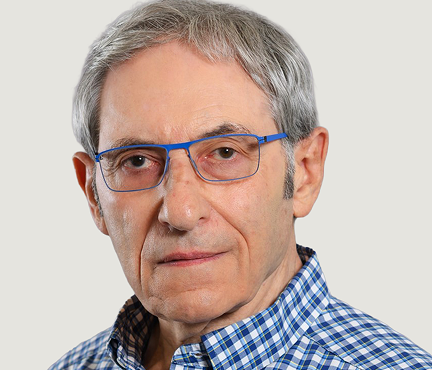
In the early 1980s, David L. Allara (Pennsylvania State University, U.S.), Ralph G. Nuzzo (University of Illinois at Urbana-Champaign, U.S.), and Jacob Sagiv (Weizmann Institute, Israel) made a series of independent discoveries about the formation of self-assembled monolayers on solid surfaces.
One group worked with gold substrates, another with silane-based chemistry, but the result was the same: a foundational technique that would underpin the development of nanolithography, soft lithography, and a host of nanotechnologies now embedded in modern manufacturing and electronics, including the most advanced chips now powering the AI revolution. They provided a foundation for manipulating matter at the molecular scale, enabling technologies that are now commonplace but were scarcely imaginable when the work was first published.
These researchers were recognized with the Kavli Prize in Materials Sciences in 2022 — nearly 40 years after their original discoveries. Once again, the societal impact of their work was unknown at the time it was done. The techniques they pioneered are now so deeply embedded in technology supply chains that their origins are largely forgotten. But their influence remained visible through citation analysis long before it became recognized more widely.
A fundamental challenge for policy and funding
These three examples — drawn from medicine, diagnostics, and materials science — illuminate a fundamental challenge for research policy and funding. At the moment of discovery, it is extraordinarily difficult to know which findings will ultimately have transformative societal impact. The gap between insight and application is filled with incremental development, engineering, regulation, market forces, and sometimes simply the passage of time.
These cases show how hard it is to make a contemporary prediction about future societal benefits. A discovery made in a university laboratory may take decades to reach a clinic, a factory, or a consumer device. The researchers who made the original breakthroughs may be long retired or, in some cases, may not live to see the full impact of their work.
If transformative impact often takes years or decades to emerge, the challenge becomes identifying signals of importance before prizes, products, and public recognition arrive. This is precisely why citation analysis offers a significant contribution in identifying researchers of Nobel class whose work will make a long-term difference in our world.
The long view matters
The stories behind some of this year’s Citation Laureates testify to the enduring value of fundamental research — and to the patience required to see its benefits realized.
For research leaders, funders, and policymakers, the message is clear: supporting basic science means investing in outcomes that may not be apparent for a generation. And for those seeking to identify the discoveries most likely to shape the future, citation analysis remains one of the most powerful tools available. When paired with expert judgment, it can act as a long-range lens that picks up signals of influence long before prizes, products, or public recognition follow.
Explore the full list of Citation Laureates 2026 and discover the research behind the recognition.
Learn more about how to assess the societal impact of research in our report on the Clarivate Societal Impact Framework and its implementation in Web of Science Research Intelligence.


Related insights
The latest news, technologies, and resources from our team.