Nexus Extend
Your library, embedded in AI tools where academic work happens
Academic work is moving into AI environments
Students and researchers increasingly conduct academic work in AI tools rather than in library or institutional systems. These tools are fast and convenient, but often miss the credibility, depth and breadth of library collections. As a result, academic resources are underused, and libraries risk having less influence over research quality and academic integrity.

Introducing Nexus Extend
Nexus Extend is an embedded academic assistant that connects AI tools and other digital environments with library content and services, bringing the library directly into user workflows and keeping it central to trusted scholarship.
It starts as a browser extension and will expand to additional formats and integrations over time.
How it works:

Detects scholarly context in AI chats, web pages and campus systems

Identifies academic references

Applies library entitlements and preferences

Connects users to verified library sources and services
Core capabilities
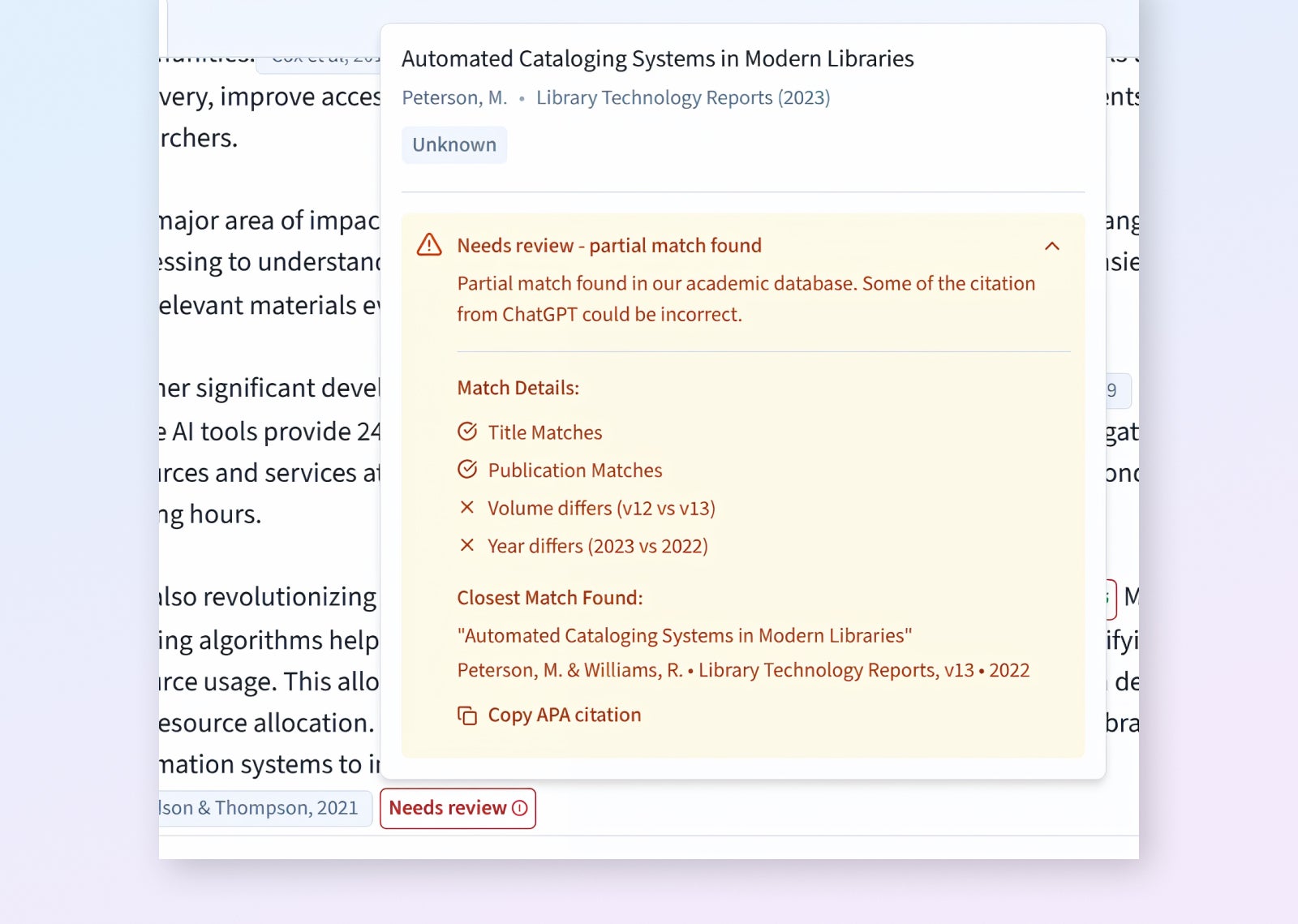
Citation verification
Identifies potentially unreliable sources by checking references against trusted academic indexes, including Primo Central Discovery Index and the Web of Science citation index.
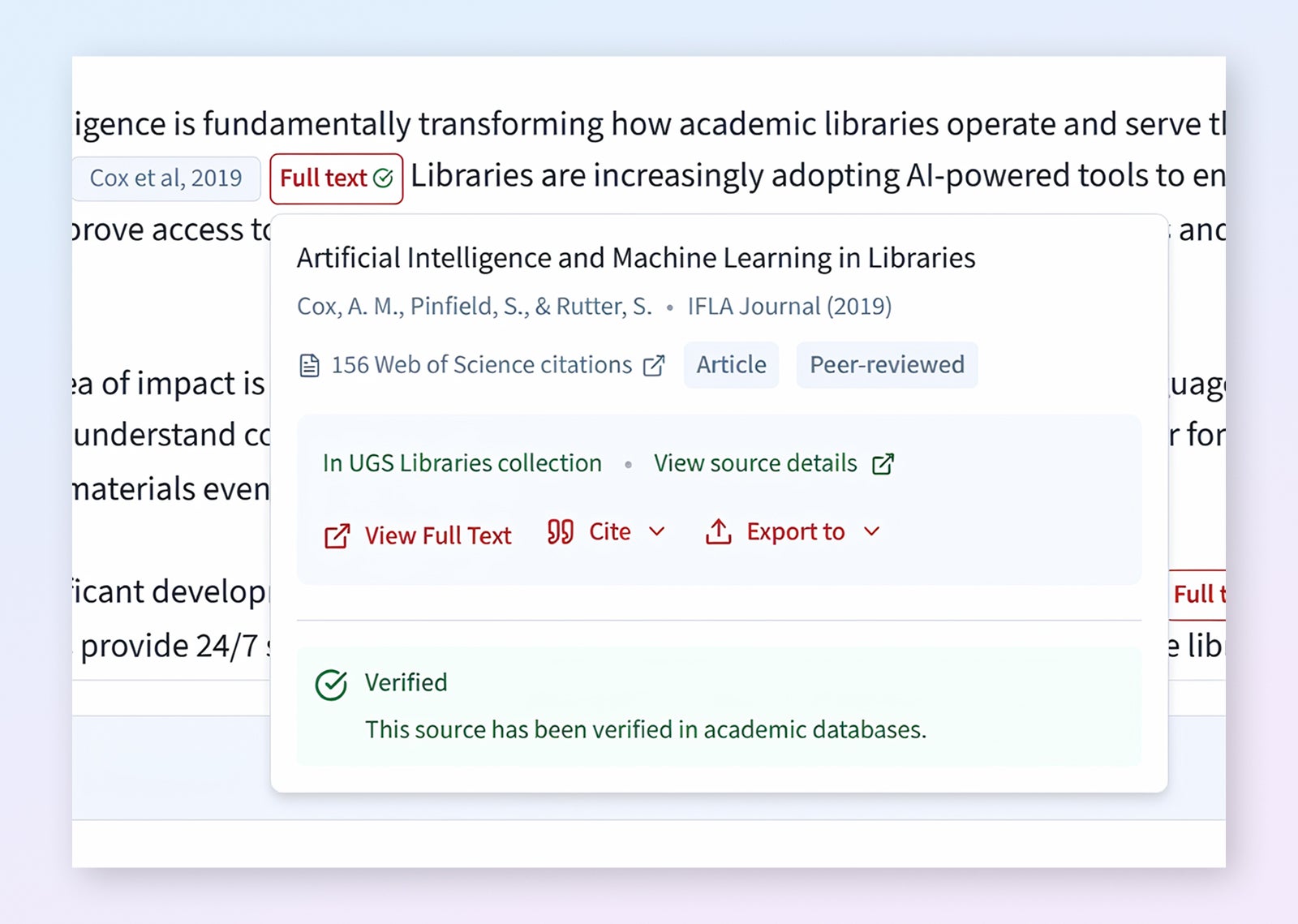
Seamless full-text access
Provides one-click “Available via Library” links for subscribed content.
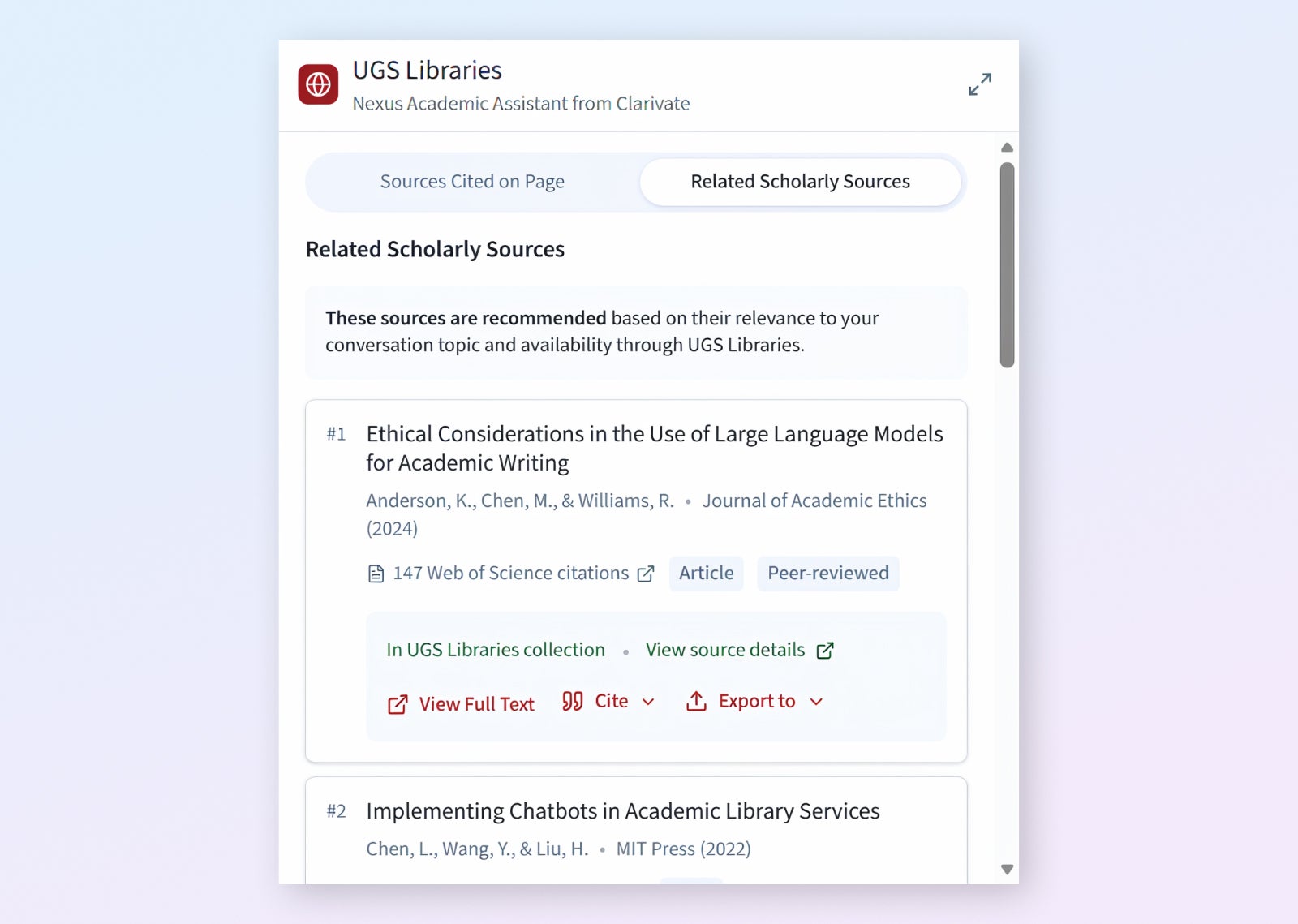
Discovery in context
Suggests relevant scholarly literature and library content based on the user’s research.
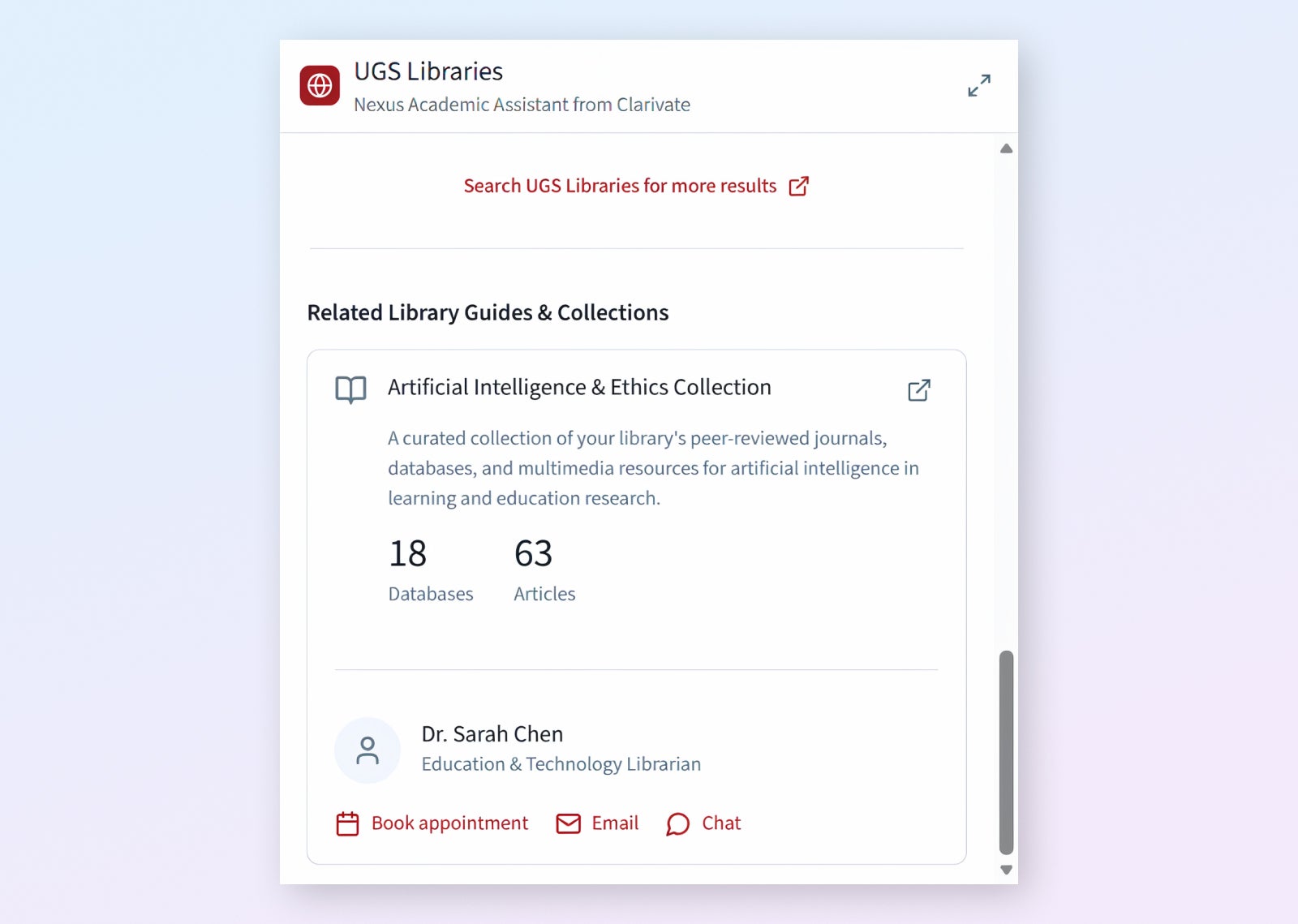
Library-branded and configurable
Reflects each library’s identity and respects institutional preferences, including which content sources to prioritize.
Designed to complement library discovery
This behind the scenes video takes you inside the development of Nexus Extend.
Supporting work across academic environments
Nexus Extend operates in environments where day-to-day research and learning are increasingly take place.

AI tools
Enhances AI conversations by connecting them to academic sources and services.

Across the web
Recognizes scholarly context on pages such as Wikipedia and links users back to library resources.

Campus systems
Integrates with learning management systems, library portals and institutional services.

Discovery and publisher platforms
Complements existing discovery tools and platforms rather than replacing them.
Built for trust, privacy, and control
Nexus Extend is built on the Clarivate Academic AI Platform and designed specifically for academic environments. It is designed with security and privacy at its core and does not expose user data or library content to AI models. Libraries retain control through configuration and governance, including which resources are exposed and how they are prioritized.
FAQs
- Nexus Extend is an academic assistant that embeds library content and services into AI tools.
It brings library resources directly into AI chat tools, where students and researchers increasingly work, as well as into web and campus systems. - It identifies scholarly context in real time
When users engage with academic topics, citations or documents within AI tools, it surfaces trusted resources and relevant library services. - It connects users to citations, full texts and library support
Nexus links users to verified citations, licensed or open-access full text, related sources and relevant library services. - It is grounded in authoritative, comprehensive data sources
Nexus Extend is powered by the industry’s most comprehensive indexes and content collections, including Web of Science, ProQuest and Primo and Summon Central Discovery Index. - Access is based on library entitlements and preferences
It aligns with library subscriptions and configurations, ensuring users only see and access the content and services their library supports.
It will first be available as a browser extension, allowing it to operate directly within AI and research tools.
Nexus Extend targets all major starting points for research & learning tasks, including:
- AI chat environments such as ChatGPT, Claude and Gemini
- Common academic starting points like Wikipedia
- Campus systems such as LMS platforms and library portals
- Publisher platforms and other academic web resources
The first release will be delivered as a browser extension, with use cases focused on AI chat tools that are increasingly used AI chat tool by students and researchers. Additional formats and integrations will follow over time.
Yes. Nexus Extend supports both library-licensed and open-access content. It does not promote any single provider.
What Nexus Extend surfaces is driven by the library’s choices and configurations. It follows institutional entitlements, linking rules and resolver logic to determine which versions of content to present, prioritizing sources according to library preferences. As a result, it reflects the library’s collection strategy and policies.
Nexus Extend scans AI responses for scholarly references and citation signals. When it identifies potential citations, it checks them against Clarivate trusted sources (Web of Science, Primo & Summon Central Discovery Index) to verify their validity and availability and adds relevant metadata where possible.
This helps users quickly determine whether cited sources are credible, accessible and suitable for academic use.
Nexus Extend relies on trusted Clarivate data and collections to ground its recommendations in authoritative academic sources.
It uses data from the Primo and Summon Central Discovery Index to identify full text availability and library holdings. It also draws on ProQuest collection to surface relevant scholarly materials.
In addition, it uses Web of Science to provide trust markers, citation metrics and other indicators that help users assess the credibility and relevance of sources.
User privacy is a core design requirement for Nexus Extend.
It runs on the Clarivate Academic AI Platform, which provides robust privacy, security and governance guardrails across all Clarivate AI-powered services. No personally identifiable information (PII) is collected, stored or transferred by Nexus Extend.
All processing follows strict privacy and security standards, ensuring that library access and services are surfaced without exposing personal data or sharing user information with AI models or third parties.
No, it does not replace library discovery systems. It extends them.
Nexus Extend brings existing discovery content and services into AI tools and other common starting points, enabling users to find and access trusted, high-quality academic resources wherever they begin their research. Existing discovery platforms remain the authoritative systems of record, while Nexus Extend increases their visibility and use in new environments.
Nexus Extend includes built-in analytics to provide actionable insights for libraries and support data-driven decisions. Analytics capabilities include:
- User behavior insights: Track how users engage with Nexus Extend features to optimize user experience
- Subscription utilization: Demonstrate usage of licensed content accessed through Nexus Extend
- Publisher-specific metrics: Monitor usage by publisher to support renewal conversations and ROI analysis
- Turnaway tracking: Identify gaps in collections when users attempt to access unavailable content
- Full-text link usage: Measure how often users access full text from various sources
Analytics are powered by Pendo, integrated directly into the browser extension to capture user interactions while maintaining privacy standards. Reports will be accessible through a dedicated analytics dashboard.